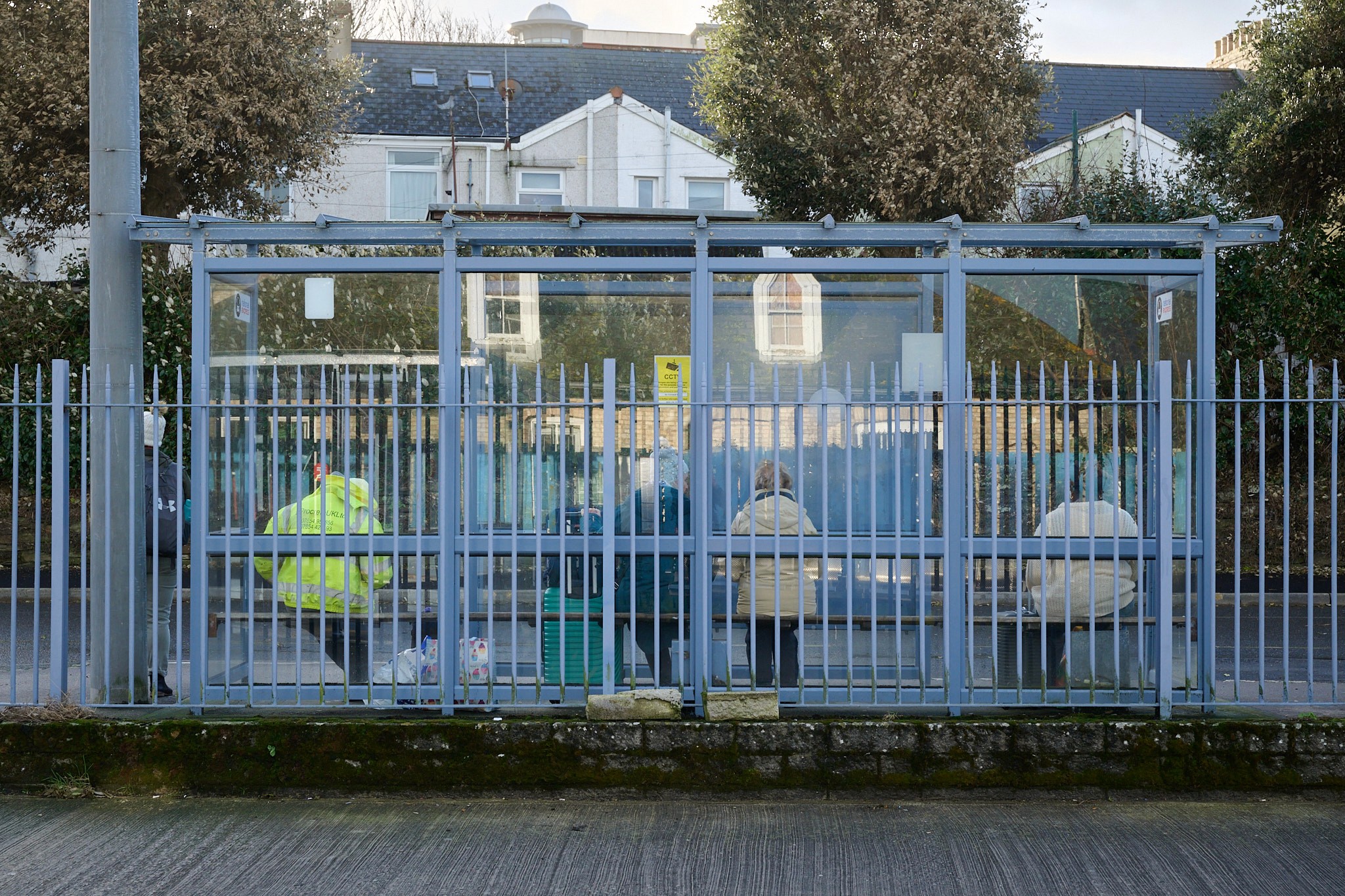
“Margaret Thatcher once said anyone on a bus over the age of 25 is a failure”
(Jeremy Corbyn [@jeremycorbyn], 2019)
Whilst it is debated whether Margaret Thatcher ever said this, “there is no indication Thatcher ever made such a statement” (Elkin, 2015), as Elkin points out, the authenticity of the quote is of little importance, rather “what matters is that people believe she could have said it” (Elkin, 2015). For the quote to be believable, it is clear that Thatcher must have portrayed a negative attitude to buses and implied they were there to serve the young before they learned to drive or had the financial stability to afford to drive – and that being able to drive was to be seen as aspirational. As a result, it is also clear that the decisions Thatcher made in The Transport Act 1985, which deregulated buses, were not made with the equity of bus users in mind – a set of decisions which has had a dramatic impact on the state and equity of buses to the present day.
In this dissertation, I will introduce the ideas of equity and equality, highlighting the distinction between the two, before contextualising this to buses and two groups, low-income communities (LICs) and disabled communities, who have some of the greatest need for equitable public transport. Following this, I will then focus on the needs of disabled people and explore the current issues preventing buses from being equitable for them. I will discuss the historical decision to privatise buses and the effects this has had on how buses operate to this day, then explore the emerging changes in how buses may be operated in the future and the potentially positive outcome this would have. Finally, I will consider how changing working habits could impact the equity of how buses may be able to operate and the consequence this could have on the social exclusion of disadvantaged groups.
For the purpose of this discussion, it is important to understand the key and subtle distinctions between equity and equality and then think about how these are applied in practice to public buses. Equality is defined as being when an “individual or group of people is given the same resources or opportunities” (MPH@GW, 2020), whereas “Equity recognizes that each person has different circumstances and allocates the exact resources and opportunities needed to reach an equal outcome” (MPH@GW, 2020). In both these definitions, the key aspect is where the equal aspect is found – as for equality, resources are available equally, whereas in equity the outcome is equal, but people’s needs and the resources that are therefore available to them differ to achieve this equal result. Many argue that the world should be aiming towards a state of equity as opposed to equality, in that the world should be able to cater to individuals’ needs – and this is the perspective I will be taking when considering the current issues with buses.
Whilst these terms are simple in theory, when considering and applying these terms to public buses, the situation becomes more complex. Unlike other support services which can be directed to specific people, such as In the benefits system by allowing access through means testing, or in the case of other services by physically locating services in areas known for needing the service provided, the same cannot be done with buses:
Public transport typically supports those who “cumulate disadvantages … [ - those who] are physically disabled, have low income, … [and typically, consequently,] are unable to own and drive a personal automobile” (Di Ciommo and Shiftan, 2017).
Considering the aspect of low income first - LICs tend to be grouped geographically, even at a small scale, as evidenced in the Office for National Statistics ‘Exploring Local Income Deprivation’ visualisation. In the given example of the town of Adur, dramatic differences in ‘income deprivation’ between even directly neighbouring areas can be seen (some examples circled in yellow):
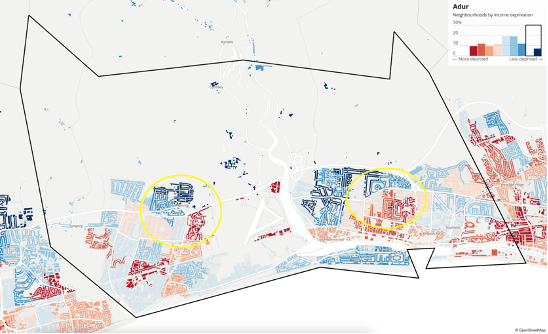
Figure 1 - Income deprivation of Adur, ONS
Through knowing geographic areas containing LICs, public buses could be planned to support these communities by providing greater levels of service to these areas. However, providing an equitable service becomes more complicated when considering that public buses inherently exist to transport someone to an end destination. Whilst it would be possible to plan for buses to connect these communities to places of work, grocery shopping, to access further support services, etc., which would achieve equity in this basic regard, to achieve full equity, it can be argued that people should have the right to travel for leisure purposes. As this removes much of the predictability of the geographic location in which a person will be travelling (for example: someone may choose to travel to other residential areas or travel further for leisure than they would for work), to achieve true equity, this requires a comprehensive transport network to allow someone to travel freely and equitably.
When considering the bus service needs of disabled people, whilst there will be some existing large-scale geographic groupings of disabled people (much in part from people moving to urban areas with better pre-existing accommodations for disabled people), which can be used to guide the provision of services, the issue is complicated by the fact that anyone can become disabled at any time, and become reliant on public transport. Therefore, it's even more crucial to provide a comprehensive network of buses to be able to support those who are disabled and to provide them with equitable transport.
Finally, it’s worth noting, that when creating a comprehensive system that accommodates and provides equity for groups with greater needs, without barriers to access for other communities, the system also inherently becomes an equality system - everyone can use it. However, whilst an equitable system inherently also achieves equality, this is not reversible – buses in the UK currently achieve equality as there is nothing directly preventing someone from using a bus, but this does not mean they are equitable – service levels in a person’s local area and a lack of a wider comprehensive network (as examples) would prevent someone from using buses as a dependable means of transport – there for the system is not equitable.
Whilst this is a broad introduction as to how the ideas of equity and equality apply to buses and how equity can be considered for some groups, let’s focus on one of the greatest needs groups, disabled people, and explore the real-world issues that are barriers to buses being an equitable solution for them.
Two key studies, Bus Users’ 2024 report, ‘Why Are We Waiting?’, and Transport for All’s 2023 report, ‘Are We There Yet?’, serve to highlight many of the physical infrastructure issues faced by disabled users on and around bus usage. These studies surveyed a number of disabled bus users on their experiences.
One of the major issues experienced surrounds the infrastructure found at bus stops and onboard buses:
“Many bus stops lack essential facilities such as seating or shelter, making it exhausting and painful for some disabled participants to wait for a bus. Obstacles such as heightened kerbs, bins, and bike stands pose difficulties and dangers in accessing and boarding buses.” (Bus Users, 2024a)
It is common for bus stops to lack key infrastructure that would be crucial for certain groups of the disabled community to be able to wait for and use a bus. Lack of seating and shelter and uneven surfaces all play a factor in hindering disabled people from waiting for a bus (Bus Users, 2024b) and lack of live information displays makes travel for visually impaired passengers a challenge, as decerning what bus is arriving in the distance may be difficult or impossible. Even when street furniture is included at bus stops, such as seating, shelter, and bike stands, users find that these can get in the way of boarding the bus, or other street furniture forms obstructions along the journey to get to the bus stop. A participant in Bus Users’ 2024 report, stated they “found it difficult to get on the bus because of a bike stand next to the bus stop [which] blocked her route to the ramp [, and she stated] that unfortunately, this was a common challenge for many wheelchair users.” (Bus Users, 2024b). In Transport for All’s 2023 report, 40% of people surveyed reported inadequate bus stops/shelters as being a barrier to using buses in the last 12 months, and 37% found that lack of real-time information displays was a barrier (Katie Pennick et al., 2023). When asked what barriers were faced when walking, it was reported that ‘quality of pavements’ (77%), ‘street clutter’ (65%), ‘pavement parking’ (57%), and ‘E-scooters/ bikes being ridden on pavements’ (50%) along with countless other issues prevented disabled people from walking (Katie Pennick et al., 2023). It is quite clear that these physical design issues negatively impact the ability of disabled people to travel to bus stops and use buses – and that’s even before the bus has turned up.
Once the bus arrives, the issues continue. It’s clear the level of maintenance and checks on bus ramps is inadequate, with 28% of respondents in Transport for All’s report stating having had experienced issues with ramps in the last 12 months (Katie Pennick et al., 2023). Bus Users’ 2024 report correlates with this, with one of their respondents sharing: “Sometimes you'll get on a bus and the driver will tell you ‘Oh, the ramp is a bit dodgy’. Then I'm kind of like, ‘Should I get on? I'd rather wait if you think it's going to break.” (Bus Users, 2024b).
On board the bus, priority seating becomes an issue. 51% of respondents stated experiencing issues with priority spaces and seating, with there being not enough, it already being in use, or not being clearly defined (Katie Pennick et al., 2023). The lack of quantity along with unclear signage means that for those who may not be visibly disabled and/or lack the confidence to ask for a seat, having to stand for their journey could impact their safety or health:
“Sometimes I don’t have a mobility aid with me and don’t look disabled as it’s a hidden disability and I look young. When seats are taken, I don’t have confidence to ask to sit down, so I risk standing for the journey and being in more pain.” (Katie Pennick et al., 2023)
For wheelchair users, the issue is even greater. With buses having very limited space for wheelchairs, availability of these spaces is not always guaranteed - "Sometimes when you get on the bus, there’s people with children in prams, and sometimes they’re reluctant to fold the pram up and give you the wheelchair space, and that means you have to wait for the next bus." (BBC News, 2024). Until recently, wheelchair users had no priority over these spaces. After a particular experience with accessing the wheelchair space on a bus, Doug Paulley, a wheelchair user and disability rights activist, launched a lawsuit against FirstGroup PLC, the operator of First Bus. Pauley argued that under the Equality Act 2010, it is discriminatory if “a bus driver … [does not] compel other passengers, disabled or non-disabled, to vacate a wheelchair space if it is required by a wheelchair user” (Disability Rights UK, n.d.). Pauley won the case, with the court ruling that “Where a driver who has made such a request concludes that a refusal is unreasonable, he or she should consider some further step to pressurise the non-wheelchair user to vacate the space, depending on the circumstances” (The Supreme Court of the United Kingdom, 2017). Despite this supposed win, issues still remain. Whilst the ruling gave bus drivers the legal backing to persuade other people to vacate the wheelchair space when possible, it still does not give wheelchair users legal priority over the space. As part of a consultation of bus conduct regulations, Disability Rights UK proposed that the law be changed to give absolute priority over the wheelchair space, however, this proposal was rejected (Disability Rights UK, n.d.). Even with bus drivers being given the power to “compel other passengers … to vacate a wheelchair space” (The Supreme Court of the United Kingdom, 2017) it appears this power is not being used effectively – evident in the multiple accounts shared in the BBC news article cited above, stories shared in Transport for All’s report –
“The first 3 buses that arrived all had buggies on them, they all refused to move for me. None of the drivers were willing to intervene. A journey that should have been 20 minutes ended up taking 3 hours.” (Katie Pennick et al., 2023)
– and in videos shared by Doug Paulley since the lawsuit. In one particular video, he shares an experience attempting to catch a bus in London. He discusses the updates made to the ‘Big Red Book’ (a guide for operations procedures for London bus drivers) since the lawsuit, but despite this, the driver fails to follow any of the procedures to encourage passengers to make space and does not communicate with Paulley at any point, resulting in Paulley being left behind (Doug Paulley, 2022).
Even once in the wheelchair space, the experience is undignified at best, and inaccessible at its worst. Wheelchair spaces are often rear-facing, placing the wheelchair user in full view of the rest of the passengers – “when I eventually park, I have to face the rest of the passengers rather than the front, so you’ve got that audience” (BBC News, 2024). This placement also prevents many wheelchair users from being able to see the live information screens and, in some cases, the design of certain wheelchairs makes the wheelchair bell button unreachable:
“I can’t see what stop we’re at … I have already complained to TfL about not being able to press the buttons to stop the bus … and had absolutely no joy whatsoever.” (Bus Users, 2024b)
Information screens and audio announcements, when included on buses, are also crucial to other disabled passengers, especially those who are visually impaired/blind or hard of hearing/deaf. However, many services lack this accessible technology, and when it is included, it is often unreliable/non-functioning – a blind passenger shared that “most local buses lack working audio announcements, making it difficult … to know when to get off without assistance” (Katie Pennick et al., 2023).
A further consideration in achieving equity is the issues surrounding the government’s disabled concessionary bus pass scheme, the English National Concessionary Travel Scheme (ENCTS). Under the scheme, those who fall Into one or more of the “7 categories of disabled people … are entitled” (GOV.UK, 2024a) to the pass, and are able to travel on any local service in England “between 9:30am and 11pm on weekdays [and] all day at weekends and on bank holidays” (GOV.UK, 2024a). To quote the government’s own evaluation of the scheme, it aims to result in:
“improved access to essential services
improved access to friends and family
improved access to leisure activities
facilitating independent living for longer.”
(Department for Transport, 2016)
Whilst the scheme achieves these goals to a limited extent, its weekday off-peak time restriction comes under particular criticism. Holders of the pass feel that the restricted travel times are discriminatory – “it denies them their independence and freedom, as well as the right to fully participate in public life … and implies disabled people do not hold a place in the world of work, education settings, or in wider social activities, and dismisses their right to equal opportunities.” (Whizz Kidz, 2023).
Some councils and their Travel Concession Authorities (TCAs) recognise the importance of providing all-day travel by providing additional subsidies to the scheme, which in some cases includes extensions to the statutory minimum travel times of the ENCTS. One such TCA, Cambridgeshire and Peterborough, recently extended travel times to include free all-day travel to all pass holders, with the Mayor stating the benefits to be “greater independence and better access to services, and … even greater flexibility with travel” (Cliss, 2024).
Whilst TCAs have the authority to provide additional benefits, in reality, implementation is fairly minimal. “(53%) [of TCAs] limit pass use to the statutory 0930 to 2300” (House of Commons, 2019). Of those 47% of TCAs that do provide extensions to the statutory travel times, the adjustments are generally minor, and few provide free ‘any-time’ travel. According to one study, as of 2023, “only 26.8% of TCAs in England offer free travel at all times of day to all disabled bus pass holders” (Whizz Kidz, 2023). Many argue that the current statutory minimum travel times are not enough and that providing additional benefits at a local level creates a discriminatory environment where “the lack of consistency of the rules creates a postcode lottery” (Whizz Kidz, 2023) as to what benefits a disabled person can access. Managing the scheme at a national level could potentially allow for travel time restrictions to be lifted nationwide and remove the impact that where someone lives affects the benefits they receive, resulting in greater equity.
There are also further calls to unify the ENCTS with Wales and Scotland’s entirely separate concessionary travel schemes. The current England-only restriction means those living by the borders are disadvantaged by their postcode if cross-border travel is needed since concessionary bus passes are not valid outside of the issuing nation. There have been petitions to either unify the separate systems or recognise the ENCTS pass in Scotland and Wales. However, the government has rejected these calls for change, citing complications with merging the “different benefits and restrictions for the concessionary bus pass which exist in each of the devolved nations” (Petitions - UK Government and Parliament, 2023), as this would “increase the costs of the scheme” (Petitions - UK Government and Parliament, 2023) but also perhaps it is because of a reluctance to offer free all-day travel, given “both Scotland and Wales currently provide free bus travel 24 hours a day, seven days a week to all disabled bus pass holders.” (Whizz Kidz, 2023).
Whilst these are some of the main issues that affect specific groups of disabled bus users, the main issue that affects all bus users, but disabled travellers most inequitably, is simply the lack of a comprehensive, reliable, and fast service. In Transport for All’s report, 48% of respondents experienced issues with ‘infrequent and unreliable service’ in the last 12 months, and 43% experienced that it took too long compared to other modes of transport (Katie Pennick et al., 2023). This issue disproportionally affects disabled people, many of whom are prevented from driving as a result of their disability, and it means that undertaking day-to-day tasks, such as travelling to work, shopping, and attending appointments takes significantly longer and is unreliable. Many call for an increase in service frequency and reliability, especially in rural areas, with one report suggesting that a legal right is needed to achieve a bus serving “Every village, every hour” (Hinchlif et al., 2021).
Historically, the decisions made by prior governments surrounding the management of buses have not been made with equity in mind, resulting in the poor levels of service and reliability seen today. Following the introduction of buses in 1903 and their rise in popularity into the 1910s and 20s (Rural Roads, n.d.), a need for regulation was realised. Measures introduced sought to improve quality (safety and comfort), service (is the service necessary - does the service fill a gap in mobility, does it not compete with existing services, does it coordinate with existing services) and to control fares (Rural Roads, n.d.). Whilst the goals of regulation seemed good on paper, in reality, implementation was poor. Bus companies had to submit plans to local authorities to run routes, and being an emerging industry, authorities had little idea what an effective application looked like, so could not effectively approve and reject applications (Rural Roads, n.d.). Furthermore, bus companies could object to applications, which led to frequent, systematic objections to prevent competition (Rural Roads, n.d.). This led to few developments being made in new services. Companies only wanted to run profitable routes, so cuts were made to off-peak and rural services. Over time, improvements were made, with many bus operations being taken over by publicly owned companies, however, it was far from perfect and “it is likely that the growth of car ownership from this time was partly stimulated by the inadequacy of public transport.” (Rural Roads, n.d.).
Instead of realising the shortcomings of the current system and developing more comprehensive regulations to control services, the government went in the opposite direction. In 1985, the Transport Act was passed, which “deregulated the majority of the local bus industry, cut … subsidy, and privatized many public bus companies” (Savage, 1993). As a part of the deregulation and privatisation measures, local authorities lost the ability to control what services ran, and publicly owned bus companies were made to be separated from councils and operated as commercial entities (the majority of which would later be sold off and privatised) (Savage, 1993). Margaret Thatcher’s government believed privatisation would bring “lower fares, new services, and more passengers” (Khawaja, 2021). The idea was that competition between private companies would bring these benefits – this was not the case. Competition was often short-term and one operator would emerge dominant and gain a monopoly over their territory. The tactics that were used were unproductive to the end users - “Tactics by incumbent operators include selective fare reductions and … flooding the market with additional and duplicative departures. This latter tactic [is] known as "swamping"” (Savage, 1993). Whilst this practice was commonplace after the privatisation measures, it is still not an uncommon practice today, with reports of ‘bus wars’ taking place – in Manchester (2000 and 2006-7 - in the latter, competition over the Wilmslow Road bus corridor caused traffic chaos), Edinburgh (2000-2), Cardiff (2004-5), Preston, over an unfair acquisition of Preston Bus by Stagecoach (2009), Weatherby (2011) (Anon, 2024) and in 2018 “Stagecoach and Arriva’s Guildford ‘Bus War’ Leaves Safeguard Feeling The Pinch” (The Guildford Dragon, 2018).
Privatisation also led to operators taking advantage of the Mohring Effect, which is defined as when “an increase in the demand for public transportation induces a decrease in the waiting time” (Silva, 2019). This, whilst a benefit to the consumer initially, as an increase in passengers can justify running a more frequent service (therefore reducing waiting times), privatisation resulted in operators wanting to “internalize the Mohring and network economies [, and as a result,] the existing city-wide multi-operator pass ticketing schemes have been gradually eroded” (Savage, 1993). This increased brand loyalty (as single-operator tickets were sold instead of multi-operator), eliminated competition (as emerging operators could not compete with the wider networks that existing operators could offer) and raised passenger numbers for the operator (resulting in a reduction in ‘cost per passenger savings’ for the operator), and overall created a monopoly for the winning operator.
Most detrimentally though, for the equity of transport networks, was the loss of cross-subsidisation. In principle, cross-subsidisation allowed profitable routes to fund un-profitable ones, and in practice, this was effective prior to privatisation, as public companies had no incentive to keep profits and would instead re-invest them into providing a comprehensive and equitable service. “Studies in the early 1980s had found that cross-subsidy was extensive … [and] in some regions of the country the level of cross-subsidy exceeded the amount of external subsidy” (Savage, 1993). After privatisation, private companies had no incentive to subsidise risky, un-profitable routes, instead opting to retain profits and as a result, many of these routes would be lost. Whilst many forms of subsidy were outlawed by the Transport Act 1985, one form was still allowed - “competitive tendering[,] whereby local authorities were given powers to fund socially necessary but unprofitable services by tendering routes to bus companies” (Simpson, 1996) - as an effort to be able to retain some unprofitable routes. Despite authorities being given the power to subsidise some routes, given that before privatisation, cross-subsidisation often provided more funding than external subsidies, and that given “deregulation was occurring at a time when local authorities were attempting to reduce expenditure levels, … it was unlikely that additional external funds would be available to make up for the reduced cross-subsidy” (Savage, 1993). In short, authorities were unable to afford to save many routes. In the years between privatisation in 1985 and the publication of Savage’s paper in 1993, “Rural service saw substantial reduction, by up to 25%” (Savage, 1993).
To summarise the issues that privatising buses created and the impact this had on equity: privatisation led to operators using unproductive tactics, such as ending cross-operator ticketing and temporarily ‘swamping’ routes with high service frequencies to push out emerging operators from the market. This allowed a few successful operators to gain a monopoly over the market which left the end user with little choice over who they travelled with. With the need to operate as profitable companies, there was little incentive to cross-subsidise more risky and less popular routes, and as a result, these routes, necessary in creating an equitable network, have been slowly lost.
These issues have not improved with time. Monopolies are still dominant - as of 2024 “the market is dominated by just five private bus companies that carry 70% of passengers” (We Own It, 2024), and these ‘big 5’ operators are owned by foreign and/or investment/banking companies (We Own It, 2024) to which “£1.49 billion [was paid] to shareholders in the ten years to 2019” (We Own It, 2024). Cross-subsidy is still near non-existent and local authorities are left to fill the gap, funding socially and equitably necessary services through competitive tendering. Without funds from successful services, it is clear councils are struggling to afford to do so - “Since 2009, well over 3,000 local authority supported bus services have been cut or reduced … [with a] total of 243 Local authority supported bus routes cut, amended or reduced” (Campaign for Better Transport, 2019).
To move forward into a more equitable system would require moving to a system that allows for the positive benefits of cross-subsidisation. For this to happen, greater public control over bus operations is needed. In 2017 the Government passed the Bus Services Act, which gave Mayoral Combined Authorities “new franchising powers” (GOV.UK, 2019) to provide greater power and control over how buses are run.
It is worth noting here that the term ‘franchising’ is perhaps misleading, given the widely accepted failure of rail franchising in the UK. In a typical franchise, “one party, the franchisor, grants another party, the franchisee, the rights to operate … [and the] franchisee typically pays an initial fee and ongoing royalties to run the business” (International Franchise Association, n.d.). This is the case in rail franchising, where the franchisee (operator) pays to run rail services in return for keeping the profits. This is not the case in bus franchising, where the franchisor (the local authority) would pay an operator to run the services, in return for the authority keeping the income made from ticketing. Under this style of franchised system, this would mean that once again “the public transport authority can use profitable routes to cross-subsidise non-profitable routes” (Centre for Cities, n.d.).
There has been some uptake of bus franchising since the Bus Services Act 2017, with Greater Manchester starting to bring its buses into a franchised system, with generally good results – “results from the initial tranche of routes … are promising. Ridership increased by 5 per cent in the six months to May 2024, … passenger revenues exceeding targets … [and] punctuality has increased to an average of 82.9 per cent during April-June 2024, 14 per cent higher than the same period in 2023.” (Centre for Cities, n.d.) – whilst overall results are generally good, as the franchise is in its early stages, it’s hard to judge if it will be able to support cross-subsidising a more comprehensive system of routes, especially in rural areas, which would be key for achieving true equity.
Despite the Bus Services Act being a positive change, its limitation of needing to be a ‘Mayoral Combined Authority’ to implement franchising has restricted uptake. The Better Buses Bill, to be passed in 2025, is expected to enable wider uptake to happen by removing the restriction. This means that “local transport authorities will be able to emulate the success of places like Manchester” (GOV.UK, 2024b). The Bill is also expected to “lift the ban on local authorities establishing their own bus companies” (GOV.UK, 2024b). This would allow authorities to buy back or create publicly owned bus companies, resulting in greater control over buses, and removes the need for an authority to pay a private company for the operation of buses. In short, both of these changes should provide authorities with greater ability to create an equitable bus system by giving the control back to authorities to operate services as desired and return an income to be able to cross-subsidise routes and to pay for upgrades to vehicles and infrastructure.
The final issue to consider when thinking about equity is in regard to changes to working habits. Sanyika, in 1995, proposed how we should consider greater flexibility in working patterns: “Allow workers whose jobs permit it to work flexible hours. Four-day workweeks, or work-at-home, if they chose to do so. We're living in an era of tele-everything. You tele-walk, you tele-talk - why can't you tele-work?” (Sanyika, 1995). Whilst this source is obviously of its age and flexible working and work from home is no longer such a radical idea, it’s still worth considering how more flexible working habits could have an impact on equity. On the one hand, flexible working habits could create more equitable access to jobs by opening up more job opportunities to those who cannot easily travel. On the other hand, it could result in a reduction in income from transport due to a smaller population needing to travel for work. This may impact the ability of a system to cross-subsidise unprofitable routes. Even if working habits can be or are being changed, it should not be done with the aim of avoiding the need to create a transport system that can accommodate those who wish they could travel. Making changes in working habits, for this reason, would ultimately contribute to the un-equitable social exclusion of those who are not accommodated by current transport systems –
“the lack or denial of resources, rights, goods and services, and the inability to participate in the normal relationships and activities, available to the majority of people in a society, whether in economic, social, cultural or political arenas … affects both the quality of life of individuals and the equity and cohesion of society as a whole.” (Levitas et al., 2007)
To conclude, many of the problematic issues surrounding the current accessibility and equity of buses stem from the decision of Margaret Thatcher’s government to privatise buses. Through privatisation, a select few operators gained a monopoly over the market, it ended cross-operator ticketing, and the need for operators to be commercially successful led to the decline of cross-subsidising rural and socially necessary routes. The move of recent governments to return buses and therefore operating profits to the hands of authorities through franchising and public ownership should enable authorities to reinstate what was lost through privatisation, and further funds may be able to accelerate the process of bringing street furniture, such as seating and shelter, along with accessible information technology to more bus stops and buses.
However, funding is not necessarily the whole story – even currently implemented measures often have issues and the planning and attitudes to accessibility need to be addressed to achieve equity. Street furniture, in a number of cases, obstructs those with mobility aids from reaching bus stops or boarding buses. Current information systems are often positioned where wheelchair users cannot view them, and there is currently no legal priority for wheelchairs to access the wheelchair space. The functioning of ramps and audio-visual information systems are often not checked and maintained, making travel difficult or impossible for those who rely on these systems.
There is also grounds for change in the government ENCTS – in that the limitations to the scheme mean that disabled travellers are restricted to free travel in England only and during off-peak hours, setting a precedent that disabled people do not hold a place in working life. There is also a ‘postcode lottery’ created by the additional benefits and subsidies, that are issued at a local authority level. Ideally, the pass should be managed as a country, so that consistency would be created in the benefits that the pass offers, and so that free anytime travel could be offered.
Finally, consideration should be made surrounding changing working habits, the reduction in income this could cause, and the impact this could have on a bus system’s ability to cross-subsidise itself.
Whilst I have focused predominantly on the issues of equity for disabled bus users, there is also a range of issues that affect other groups, such as LICs – however, exploring this is beyond the scope of this dissertation. Despite this, It also goes without saying that changes that would support and create more equitable buses for disabled users would not exclusively benefit this group – many would inevitably also assist in creating more equitable buses for LICs and improve the system for the general public as a whole.
Figure List
Figure 1 - Income deprivation of Adur, ONS
Available from: https://www.ons.gov.uk/visualisations/dvc1371/ (2021). Exploring local income deprivation [online]. [Accessed 9 January 2025].
Bibliography
Anon (2024). Bus deregulation in Great Britain. Wikipedia [online]. Available from: https://en.wikipedia.org/w/index.php?title=Bus_deregulation_in_Great_Britain&oldid=1256952102#Competition_cases [Accessed 19 November 2024].
BBC News (2024). Transport: Wheelchair user not always guaranteed spot on bus [online]. Available from: https://www.bbc.com/news/articles/c206pd1jl8no [Accessed 30 December 2024].
Bus Users (2024a). New report exposes accessibility challenges for disabled bus passengers • Bus Users [online]. Available from: https://bususers.org/uk/new-report-exposes-accessibility-challenges-for-disabled-bus-passengers/ [Accessed 30 December 2024].
Bus Users (2024b). Why Are We Waiting? Bus Users.
Campaign for Better Transport (2019). The future of the bus. London: Campaign for Better Transport.
Centre for Cities (n.d.). Everything you need to know about bus franchising [online]. Available from: https://www.centreforcities.org/publication/everything-you-need-to-know-about-bus-franchising/ [Accessed 31 December 2024].
Cliss, S. (2024). ‘All day’ concessionary bus pass travel in Cambridgeshire moves a step closer [online]. Available from: https://archive.ph/Oclfu [Accessed 21 December 2024].
Department for Transport (2016). Evaluation of Concessionary Bus Travel: The impacts of the free bus pass. Department for Transport [online]. Available from: https://assets.publishing.service.gov.uk/media/5e7de9fd86650c743803737b/evaluation-of-concessionary-bus-travel.pdf.
Di Ciommo, F. and Shiftan, Y. (2017). Transport equity analysis. Transport Reviews. Routledge. Vol. 37 No. 2. pp. 139–151 [online]. https://doi.org/10.1080/01441647.2017.1278647.
Disability Rights UK (n.d.). Firstgroup Plc v Paulley [online]. Available from: https://www.disabilityrightsuk.org/firstgroup-plc-v-paulley [Accessed 30 December 2024a].
Disability Rights UK (n.d.). Our response to the Bus Conduct regulations consultation [online]. Available from: https://www.disabilityrightsuk.org/our-response-bus-conduct-regulations-consultation [Accessed 30 December 2024b].
Doug Paulley (2022). GoAhead driver refuses wheelchair user [online]. Available from: https://www.youtube.com/watch?v=xqOnAv9m4LM [Accessed 30 December 2024].
Elkin, L. (2015). ‘Anyone over the age of thirty catching a bus can consider himself a failure’: Class Mobility and Public Transport in Zadie Smith’s NW. Études britanniques contemporaines. Revue de la Société dʼétudes anglaises contemporaines. Presses universitaires de la Méditerranée. No. 49 [online]. https://doi.org/10.4000/ebc.2679 [Accessed 14 November 2024].
GOV.UK (2019). Bus Services Act [online]. Available from: https://www.gov.uk/government/collections/bus-services-bill-overview [Accessed 8 January 2025].
GOV.UK (2024a). Managing the English national concessionary travel scheme (ENCTS) [online]. Available from: https://www.gov.uk/government/publications/guidance-for-travel-concession-authorities-on-the-england-national-concessionary-travel-scheme/guidance-for-travel-concession-authorities-on-the-england-national-concessionary-travel-scheme [Accessed 10 October 2024].
GOV.UK (2024b). Better buses on the way as government introduces new legislation to boost local control of services [online]. Available from: https://www.gov.uk/government/news/better-buses-on-the-way-as-government-introduces-new-legislation-to-boost-local-control-of-services [Accessed 8 January 2025].
Hinchlif, C., CPRE and Ian Taylor, and Transport for Quality of Life (2021). Every village, every hour: a comprehensive bus network for rural England [online]. Available from: https://www.transportforqualityoflife.com/reports/every-village-every-hour-a-comprehensive-bus-network-for-rural-england/ [Accessed 11 January 2025].
House of Commons (2019). Review of Reduced and Concessionary Fares in England outside London. House of Commons.
International Franchise Association (n.d.). What Is a Franchise? | Franchise FAQs [online]. Available from: https://www.franchise.org/faqs/basics/what-is-a-franchise [Accessed 8 January 2025].
Jeremy Corbyn [@jeremycorbyn] (2019). As I said at the launch of our policy to restore the 3,000 bus routes cut by the Conservatives since 2010: ‘Margaret Thatcher once said anyone on a bus over the age of 25 is a failure. We’ve moved on from that – I think people on a bus is a success.’ https://t.co/UHp9YzbYO1. Twitter. Tweet [online]. Available from: https://x.com/jeremycorbyn/status/1122147297415004160 [Accessed 18 January 2025].
Katie Pennick, Caroline Stickland, Madeleine Stewart, and Emma Vogelmann (2023). Are We There Yet? Transport for All.
Khawaja, B. (2021). Bus privatisation has destroyed a British public service – but there is a way back. The Guardian. 26th July [online]. Available from: https://www.theguardian.com/commentisfree/2021/jul/26/bus-privatisation-public-service-strategy-british-private-market [Accessed 6 January 2025].
Levitas, R., Pantazis, C., Fahmy, E., Gordon, D., Lloyd-Reichling, E. and Patsios, D. (2007). The multi-dimensional analysis of social exclusion. Bristol: University of Bristol [online]. Available from: https://repository.uel.ac.uk/item/8666q [Accessed 8 January 2025].
MPH@GW (2020). Equity vs. Equality: What’s the Difference? [online]. Available from: https://onlinepublichealth.gwu.edu/resources/equity-vs-equality/ [Accessed 17 December 2024].
Petitions - UK Government and Parliament (2023). Archived Petition: Negotiate UK-wide recognition of older person’s bus passes [online]. Available from: https://petition.parliament.uk/archived/petitions/652985 [Accessed 21 December 2024].
Rural Roads (n.d.). History of Rural Bus Regulation [online]. Available from: https://ruralroads.org/history-bus-regulation/ [Accessed 11 November 2024].
Sanyika, M. (1995). The Equity Implications of Market-Based Transportation Control. Race, Poverty & the Environment. Reimagine! Vol. 6 No. 1. pp. 19–22.
Savage, I. (1993). Deregulation and Privatization of Britain’s Local Bus Industry. Journal of Regulatory Economics. Vol. 5 No. 2. pp. 143–58 [online]. https://doi.org/10.1007/BF01065363.
Silva, H. (2019). The Mohring Effect [online]. Available from: https://ideas.repec.org//p/ioe/doctra/529.html [Accessed 6 January 2025].
Simpson, B.J. (1996). Deregulation and privatization: the British local bus industry following the transport act 1985. Transport Reviews. Routledge. Vol. 16 No. 3. pp. 213–223 [online]. https://doi.org/10.1080/01441649608716948.
The Guildford Dragon (2018). Stagecoach and Arriva’s Guildford ‘Bus War’ Leaves Safeguard Feeling The Pinch [online]. Available from: https://web.archive.org/web/20181118172945/https://www.guildford-dragon.com/2018/11/16/stagecoach-and-arrivas-guildford-bus-war-leaves-safeguard-feeling-the-pinch/ [Accessed 6 January 2025].
The Supreme Court of the United Kingdom (2017). PRESS SUMMARY FirstGroup Plc (Respondent) v Paulley (Appellant) [2017] UKSC 4 On appeal from [2014] EWCA Civ 1573. The Supreme Court of the United Kingdom [online]. Available from: https://www.supremecourt.uk/cases/uksc-2015-0025.
We Own It (2024). Buses are better in public hands [online]. Available from: https://weownit.org.uk/public-ownership/buses [Accessed 19 November 2024].
Whizz Kidz (2023). Beyond Fare: Equality through Concessionary Bus Travel | Text Version [online]. Available from: https://www.whizz-kidz.org.uk/about-us/policy-research/beyond-fare/text/ [Accessed 24 December 2024].